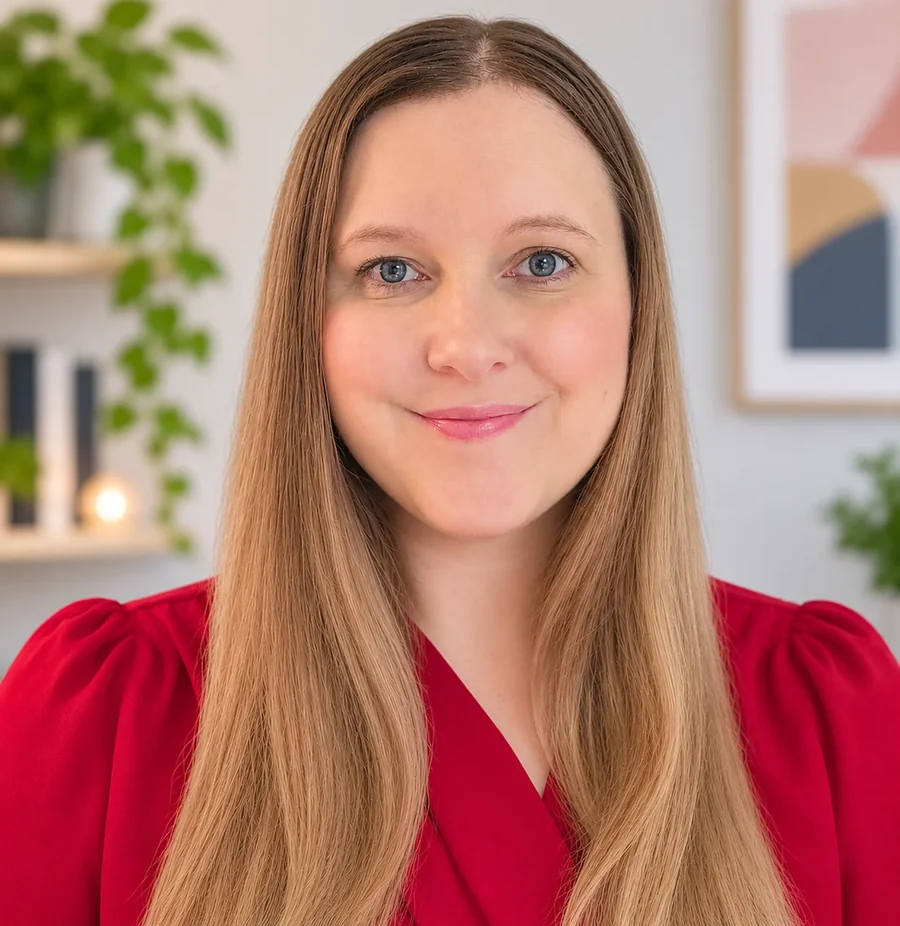
Melissa’s story
Hi, I’m Melissa, the author of this book and an Autistic Aussie living in Queensland. I grew up in the ’90s, when girls weren’t often seen as autistic. Instead, we were “shy”, “quiet achievers” or “just a little different”. So, like many autistic women, I wasn’t diagnosed until I was 33. Looking back, there were plenty of clues…
I’m Melissa. I wrote this book. I’m autistic and I live in Queensland. I found out I was autistic when I was 33.
The early clues
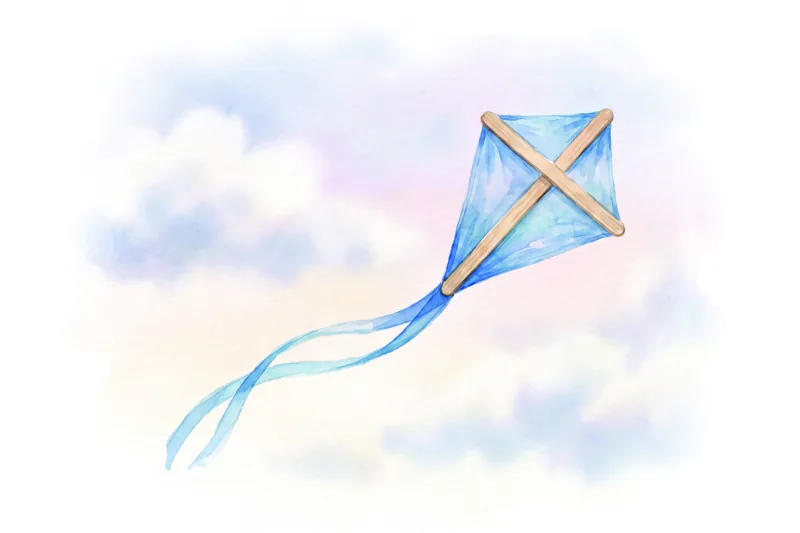
My first clue came in kindy (kindergarten, for non-Queenslanders). I’d rather sit alone in the playground tunnel than play with the other kids. Then, when we were meant to be making puppets out of paddle pop sticks, I made a kite instead. Watching Mary Poppins on repeat had given me an early special interest in kites! My kindy teacher was concerned and brought it up with my mum, who stood up for my creativity and out-of-the-box thinking.
When the words wouldn’t come
All through primary and high school, talking was so hard that some people thought I couldn’t speak. A lot of the time, I really couldn’t get the words out.
At lunchtime in primary school, you could find me sitting alone by the junior playground, eating a lemon cut into wedges like an orange. I now know this was sensory seeking. Plus, thanks to ARFID, lemons were one of the few fruits I’d eat! I guess when life gives you lemons as an autistic kid, you eat them in peaceful solitude.
The other place to find me was the school library, hunting for any Goosebumps books I hadn’t read yet. At home, I’d rather be in my room drawing, listening to the same CD on repeat, or playing the same songs on guitar or piano.
Learning to fit in
Another big clue was adults getting mad at me for not making eye contact. They thought I was being rude, but I didn’t even notice I wasn’t looking at them. After being yelled at by someone else’s parent and at least one teacher, I became hyper-aware of where to look. That was the start of “masking”: forcing myself through discomfort to fit in.
In high school, I was bullied for reasons I didn’t understand, sadly a common autistic experience. Talking in person was hard, so I tried to make friends in online chatrooms. As a vulnerable young girl though, I mostly found the kind of people Chris Hansen would tell to “take a seat”. Still, I made a couple of good friends through shared interests, who later turned out to be neurodivergent too. I’m convinced we have a built-in “autism radar”: it happened again with my nerdy friend group at uni!
Too much, all at once
As a teen, I’d feel physically sick every time my best friend and I went to Target. We joked about it, but I didn’t understand why until I learned about sensory overload. The bright lights, they burn!
Grocery shopping did the same, to the point of crying in the cheese aisle at Woolies, so I switched to click and collect and delivery. I was supporting my sensory needs before I even understood them!
Now I use tools like Loop earplugs, sunglasses and hats to turn down the volume on the world.
Finding out
It wasn’t until after university that I even considered I might be autistic. Honestly, I didn’t really know what autism was.
At 23, I was diagnosed with anorexia nervosa. Autistic people are nearly three times more likely to be diagnosed with an eating disorder.
Through online eating disorder support groups, I met my first autistic friend (that I knew of at the time!). The autism radar struck again: she thought I was autistic too, and that I should get assessed. At the time I wasn’t ready or knowledgeable enough, plus I was a broke uni student!
Assessment in Australia can be expensive. I wanted to be sure before spending what was a huge amount of money to young me.
Through my 20s, I met more autistic people, and every one of them could tell I was autistic too. That started a decade-long hyperfocus on self-discovery and autism research, which eventually led to my diagnosis; and this book.
Diagnosis
Finally, at 33, I was officially diagnosed with autism spectrum disorder (ASD) level 2 and ADHD inattentive type. I didn’t even know inattentive ADHD existed! I thought ADHD was only the hyperactive kind, the opposite of me.
I’ve discovered a lot about myself since then, and so many of those early clues finally make sense.
After another rabbit hole of learning everything I could about autism, ADHD and the conditions that often come with them, I wanted to use what I’d learnt to help other Autistic and ADHD Aussies understand themselves and get the support they need.
So, let’s go fly our kites and send them soaring!
If reading about eating disorders brings up anything for you, the Butterfly Foundation can help: 1800 33 4673.